


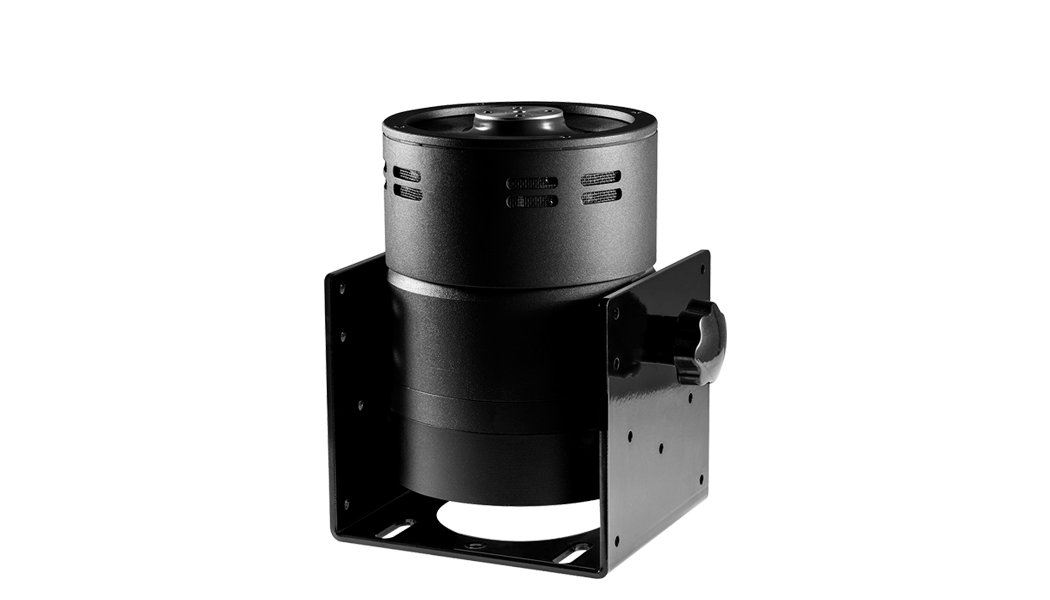
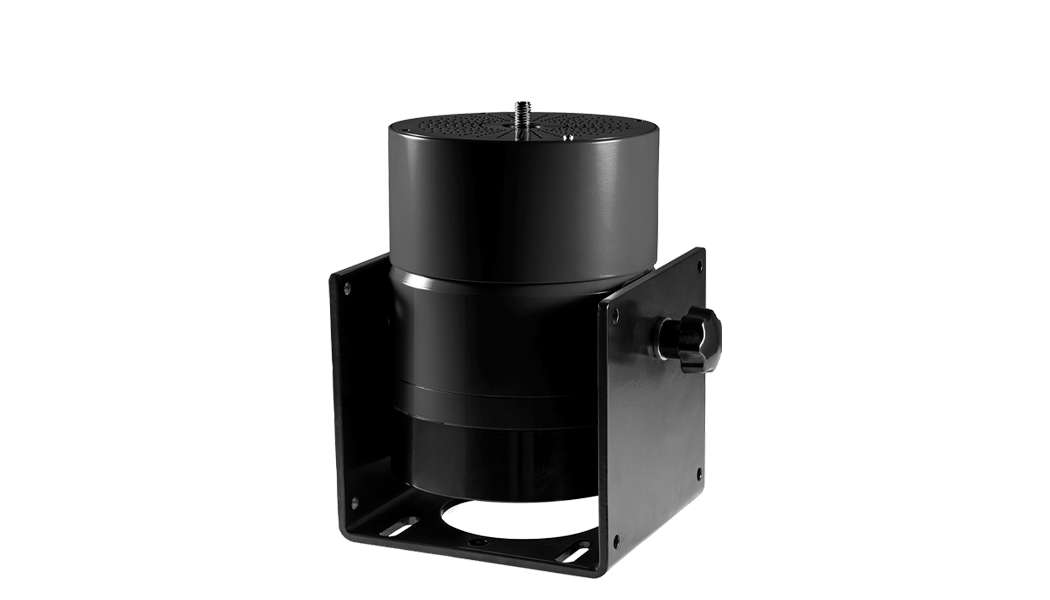
Modal & Low Force Shakers for Accurate Vibration Testing
For modal analysis, low-force excitation, structural response testing, and vibration transducer calibration.
DTC’s TEN-V Low Force Shakers and TEN-M Modal Shakers help engineers excite small components, structures, sensors, and mechanical assemblies with controlled low-force vibration. They are used for modal analysis, structural dynamics studies, mechanical impedance measurement, vibration transducer calibration, and laboratory vibration testing.
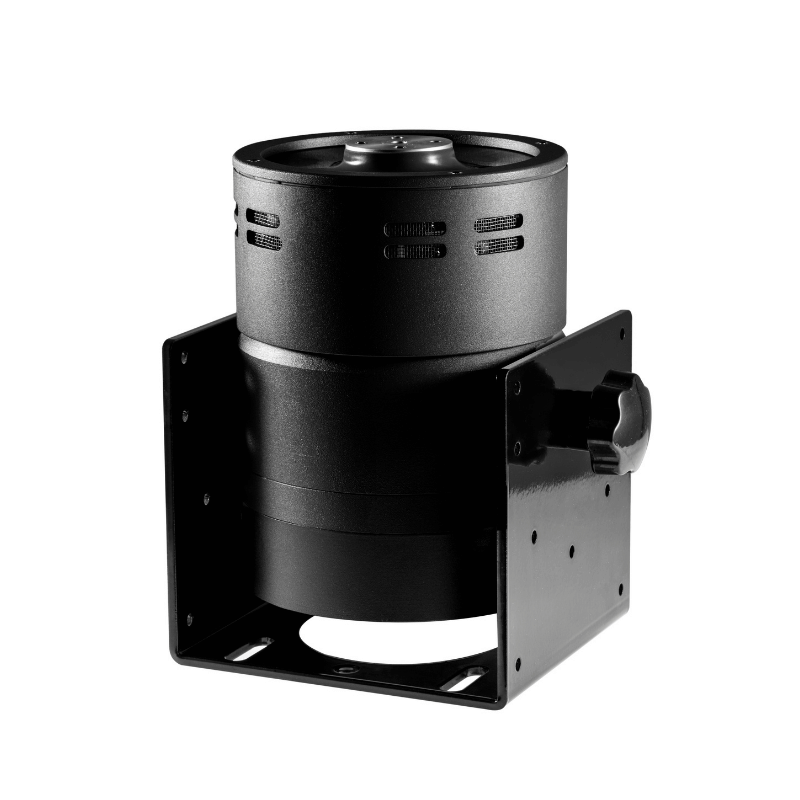
TENZO Series Low Force Shakers
TENZO Series Low Force Shakers are compact, high-quality vibration exciters designed for reliable, long-term operation. Available with force ratings from 10 N to 1000 N, they can excite a wide range of test specimens and components to high acceleration levels, making them suitable for laboratory testing, sensor calibration, and vibration analysis.
The moving element is supported by a robust rectilinear guidance system that combines radial and transverse flexures for precise motion control. A bonded spring steel and damping elastomer construction minimizes cross-axis motion and distortion, delivering clean acceleration waveforms and accurate, repeatable test results.
Typical Applications for TEN-V Low Force Shakers:
Small-component vibration testing
Mechanical impedance measurement
Educational and laboratory demonstrations
Structural response testing
Vibration transducer calibration
Sensor and electronics testing
TEN-V System Components:
Shaker
Digital power amplifier
Interconnect cables
Optional vibration controller
Data acquisition system
Vibration/shock testing sensors can be selected based on test requirements
TEN-V Low Force Shaker Specifications
Compare TEN-V models by type, frequency range, displacement, acceleration, load capacity, and physical size.
| Specifications | TEN-V50 | TEN-V100 | TEN-V200 | TEN-V300 | TEN-V500 | TEN-V1000 |
|---|---|---|---|---|---|---|
| Rated peak force(Sine/Random) forced-air cooled | N/A | N/A | 200N | 300N | 500N/350N | 1000N/700N |
| Rated peak force(Sine/Random) convection | 50N | 100N | 100N | 150N | 250N/175N | 500N/350N |
| Frequency range | 5-10kHz | 5-7000Hz | 5-6500Hz | 5-6500Hz | 5-5000Hz | 5-4000Hz |
| Main resonance frequency (Hz) | 9500 | 4800 | 4800 | 4800 | 3560 | 3100 |
| Max. displacement (mm) P-P | 10 | 10 | 12 | 12 | 15 | 15 |
| Max. acceleration (g) | 20 | 35 | 50 | 65 | 80 | 80 |
| Effective moving mass (kg) | 0.25 | 0.4 | 0.4 | 0.45 | 0.63 | 1.3 |
| Weight uncrated (kg) | 3.6 | 14.5 | 14.5 | 14.5 | 15 | 41 |
| Max. load (kg) | 2 | 3 | 3 | 4 | 4 | 6 |
| Coupling (Thread Ø mm) | 4xM5 | 4xM5 | 4xM5 | 4xM5 | 4xM5 | 4xM6 |
| Table size (mm) | Φ30 | Φ50 | Φ50 | Φ50 | Φ50 | Φ60 |
| Dimensions uncrated (WxHxD)(mm) | 183*110*162 | 242*202*245 | 242*202*245 | 242*202*245 | 262*192*242 | 347*267*319 |
| Max. operating current | 4A | 5A | 10A | 10A | 10A | 13A |
| DC resistance | 1.1Ω | 2.8Ω | 2.8Ω | 2.8Ω | 4Ω | 3.8Ω |
| Protection | Over-displacement Over-current Over-temperature | Over-displacement Over-voltage Over-current Over-temperature | ||||
TENZO Series Modal Shakers
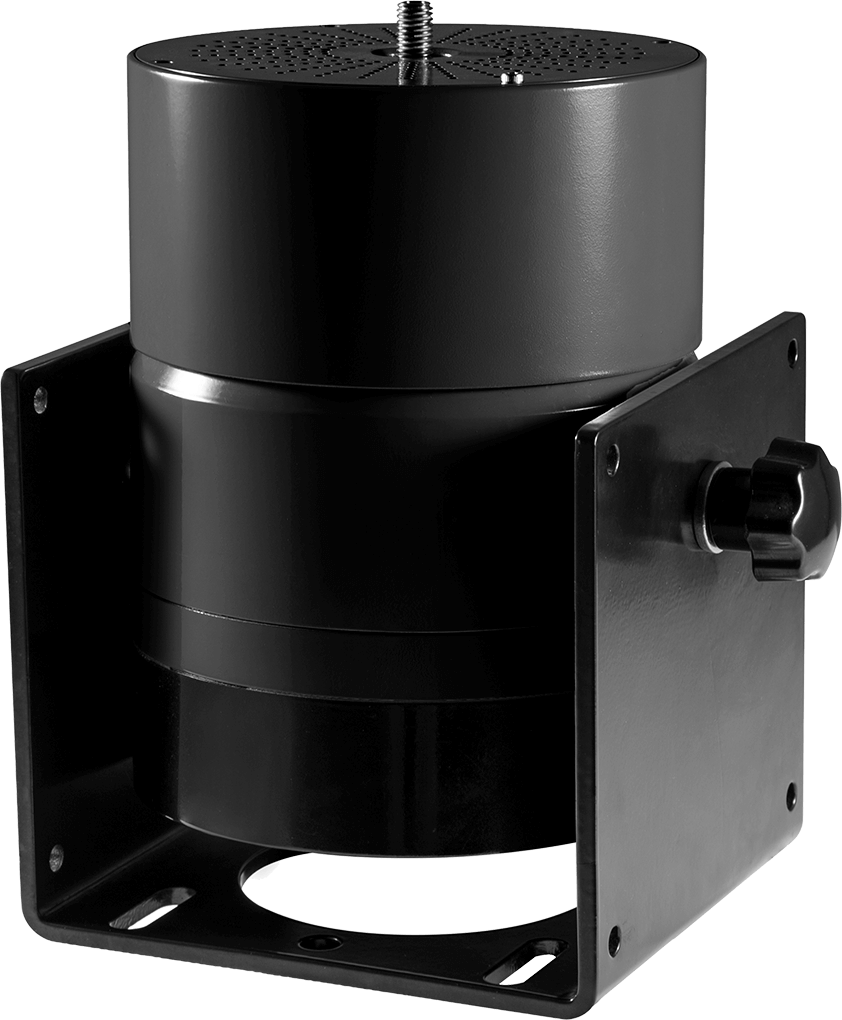
TENZO Series Modal Shakers are engineered for precise and reliable modal testing. Built with high-quality materials, rugged construction, and strict quality control standards, they provide stable and long-lasting performance for experimental modal analysis using attached excitation methods.
Developed from years of practical testing experience, TENZO modal shakers deliver a high force-to-weight ratio for efficient excitation with minimal setup effort. Their compact, versatile design helps engineers achieve accurate modal test results across a wide range of structures and applications.
Typical Applications for TEN-M Modal Shakers:
Mechanical mobility measurement
Experimental modal analysis
SISO, MISO, SIMO, and MIMO modal testing
Advanced structural dynamics investigations
Structural damage detection
TEN-M System components:
Modal shaker
Digital power amplifier
Interconnect cables
Optional controller
Data acquisition system
Sensors for modal response measurement
TEN-M Modal Shaker Specifications
Compare TEN-M models by force rating, frequency range, displacement, acceleration, moving mass, and physical size.
| Specifications | TEN-M50 | TEN-M100 | TEN-M200 | TEN-M300 | TEN-M500 | TEN-M1000 |
|---|---|---|---|---|---|---|
| Rated peak force(N) forced-air cooled | N/A | N/A | 200N | 300N | 500N/350N | 1000N/700N |
| Rated peak force(N) naturally cooled | 50N | 100N | 100N | 150N | 250N/175N | 500N/350N |
| Frequency range (Hz) | DC-10000 | DC-8000 | DC-8000 | DC-8000 | DC-6000 | DC-4500 |
| Main resonance frequency (Hz) | 10000 | 5800 | 5800 | 5800 | 4700 | 3900 |
| Max. displacement (mm) P-P | 16 | 18 | 18 | 18 | 20 | 20 |
| Max. acceleration speed (g) | 40 | 35 | 70 | 100 | 100 | 100 |
| Effective moving mass (kg) | 0.13 | 0.32 | 0.3 | 0.3 | 0.45 | 1 |
| Shaker weight (kg) | 4 | 14.5 | 14.5 | 15 | 16 | 41 |
| Coupling (Thread Ø mm) | M6 | M6 | M6 | M6 | M6 | M6 |
| Dimensions (LxWxH)(mm) | 183*110*167 | 242*202*250 | 242*202*250 | 242*202*250 | 262*192*247 | 347*220*342 |
| Max. operating current | 4A | 5A | 10A | 10A | 10A | 13A |
| DC resistance | 1.1 | 2.8 | 2.8 | 3 | 4 | 3.8 |
| Protection | Over-displacement Over-voltage Over-current Over-temperature | |||||
TENZO Series Power Amplifier
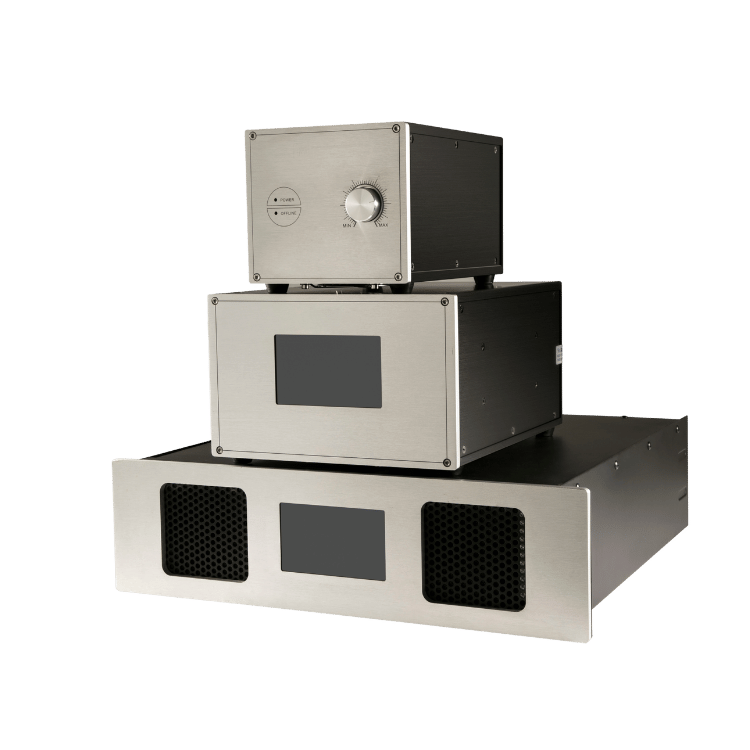
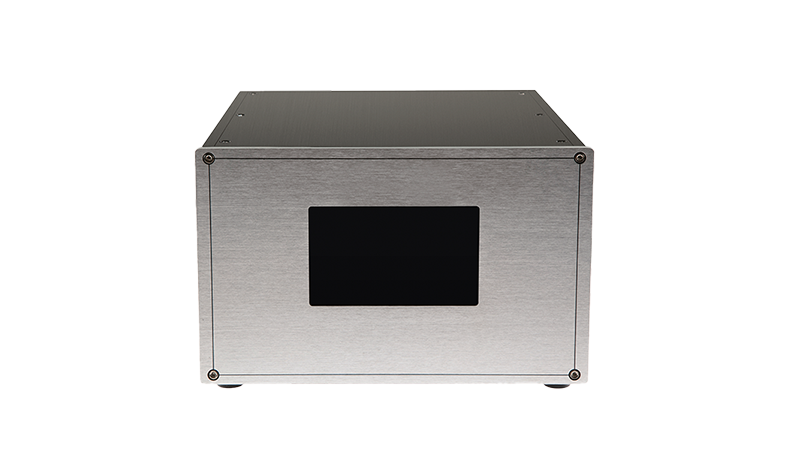
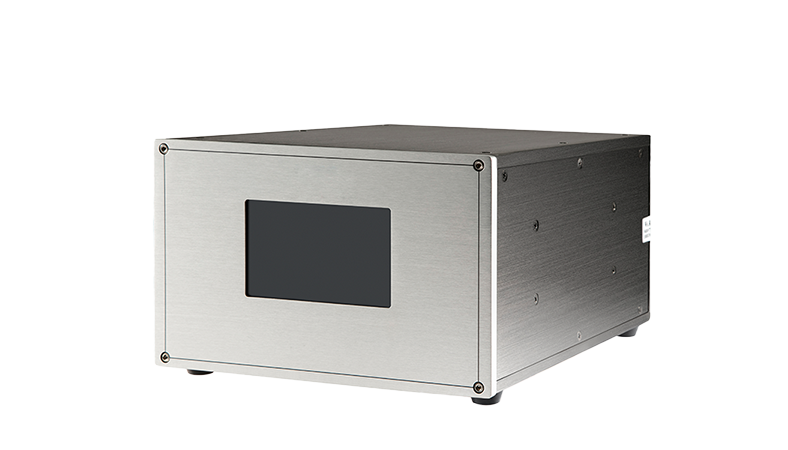
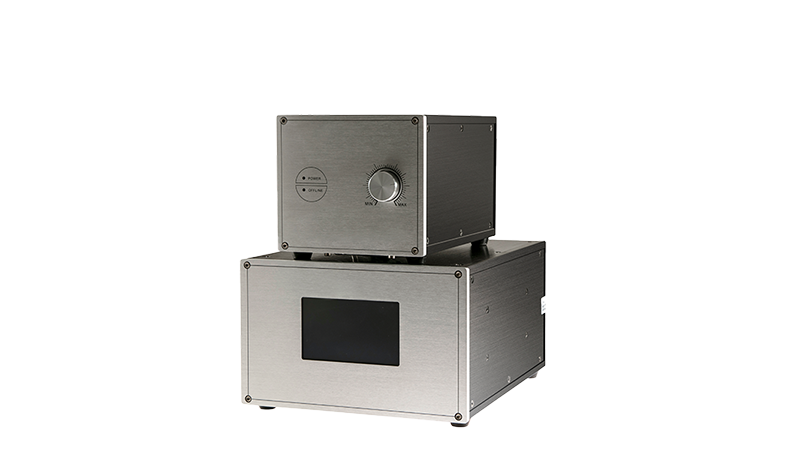
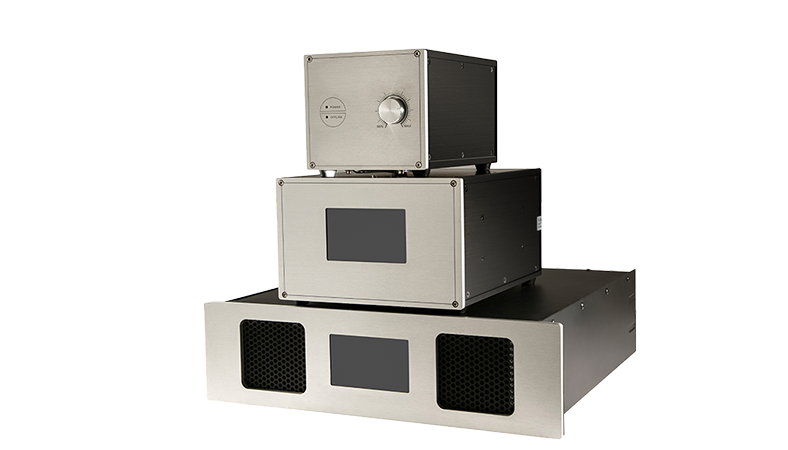
TENZO Series power amplifier is designed with the state-of-the-art technology. With TENZO power amplifier, the testing could be performed with ease. Modern design, user friendly operation and interactive microprocessor logic control system ensure TENZO Series power amplifier delivers full performance, which is why our power amplifier enjoys a good reputation among customers.
TEN-A features:
Adjustable RMS output-current limit
Low output impedance
Low distortion over wide frequency range
Extensive built-in protection
Operating mode (current or voltage), current state and interlock input disabled
Rear panel voltage and current monitor points
TENZO Power Amplifier Specifications
Compare TEN-A models by type, frequency range, output voltage, current, and physical size.
| Specifications | TEN-A200 | TEN-A450 | TEN-A650 | TEN-A750 | TEN-A1100 | TEN-A1500 |
|---|---|---|---|---|---|---|
| Linear Amplifier or Digital Amplifier | Linear or Digital | Digital Amplifier | ||||
| Amplifier Output | 200VA | 450VA | 650VA | 750VA | 1100VA | 1500VA |
| Frequency range (kHz) | DC-20 | |||||
| Max. Output Voltage | 30V | 45V | 65V | 75V | 110V | 110V |
| Max. Output Current | 6A | 10A | 10A | 10A | 10A | 13A |
| Signal Input Voltage | <3 V rms | <1 V rms | ||||
| Signal to noise ratio | >90db | |||||
| Total Harmonic Distortion | <1% (1 KHZ) | |||||
| Weight (kg) | 4.5 | 4.5 | 5.5 | 6 | 6 | 6.5 |
| Dimensions (WxHxD)(mm) | 250*320*160 | |||||
| Adjustment Function | Current & Voltage Limits | |||||
| Protection | Over-voltage Over-current Over-temperature | Over-displacement Over-voltage Over-current Over-temperature | ||||
| Max. Power Consumption at 230V | 440VA | 500VA | 720VA | 820VA | 1.2kVA | 1.6kVA |
When to Use
a Modal or Low Force Shaker
Modal and low force shakers are used across vibration testing, structural dynamics, sensor calibration, and frequency response measurement—but choosing the right type depends on your application.
Use a low force shaker for:
Small components
Electronics
Sensors
Calibration
Laboratory vibration tests
Use a modal shaker for:
Modal analysis
Structural dynamics
Mechanical mobility measurement
Vibration response studies
Frequently Asked Questions
-
A low force shaker is used for controlled vibration testing of small components, electronic assemblies, sensors, transducers, and lightweight structures. It is suitable for laboratory experiments, structural response testing, and calibration work.
-
A modal shaker is used for modal analysis and structural dynamics testing. It helps engineers excite a structure and measure how it responds across different frequencies.
-
TEN-V Low Force Shakers are mainly used for low-force vibration testing, small component testing, and transducer calibration. TEN-M Modal Shakers are designed for modal analysis, mechanical mobility measurement, and structural dynamics investigations.
-
Engineers should consider the test object mass, required acceleration level, frequency range, displacement, fixture design, and measurement objective. If the force is too low, the test may not excite the structure properly. If it is too high, the setup may become difficult to control.
-
Yes. TEN-M Modal Shakers are designed for modal analysis, including SISO, MISO, SIMO, and MIMO modal test applications. TEN-V Low Force Shakers can also support modal studies and laboratory vibration work depending on the setup.
-
A complete setup may include the shaker, digital power amplifier, interconnect cables, vibration controller, data acquisition system, and sensors. The final setup depends on the test type and measurement requirements.
-
Yes. DTC can help engineers review the required force range, frequency range, test object size, sensor setup, and measurement goals to identify a suitable shaker configuration.
-
Yes. DTC provides vibration and shock testing sensors that help engineers capture acceleration, vibration, shock, and modal response data accurately during testing.
Get in Touch with Us
Have questions or need assistance? We’re here to help.
ROOM 401, 4/F., WANCHAI CENTRAL BUILDING, 89 LOCKHART ROAD, WAN CHAI, HONG KONG

sales@dtc-solutions.com
